Argentine sub in 2017 implosion was seaworthy, trial told / Photo: © AFP

The Argentine naval submarine that imploded in 2017, killing 44 sailors, was seaworthy, the highest-ranking of four former officers said Wednesday on the second day of their trial.
"The charges are unjust, they are false, and I am innocent," Claudio Villamide, commander of the submarine force at the time of the tragedy, told the court in the far-southern Patagonian city of Rio Gallegos.
"The submarine met all standards and requirements. It is false that it was not seaworthy."
The ARA San Juan went missing a week after it set off from Ushuaia on Argentina's southern tip and was returning to its home port at the Mar del Plata naval base.
The vessel's crushed wreckage still lies on the seabed in the South Atlantic, 500 kilometers (310 miles) off Santa Cruz province, where the trial is taking place.
The disaster was the deadliest for the Argentine navy in peacetime.
Prosecutors say that the San Juan was in a poor state of repair and that its demise was "foreseeable."
The submarine vanished on November 15, 2017 after reporting that seawater had entered the ventilation system, causing a battery on the vessel to short-circuit and start a fire.
Villamide and three other former senior officers are on trial for dereliction of duty and aggravated negligent destruction.
They face between one and five years in prison if convicted.
Villamide, who was dismissed from the navy in 2021 for negligence over the San Juan's sinking, insisted that the ship "was in condition to sail safely, it had its necessary toolboxes and manuals, safety equipment, and escape devices."
- Like trying to salvage Titanic -
His lawyer, Juan Pablo Vigliero, told AFP that he was "absolutely confident" of his client's acquittal, arguing that the prosecution lacked evidence to convict him because it had not been able to collect evidence from the wrecked submarine.
"The truth is...that to this day we don't know what happened," he said, adding that salvaging the wreck from a depth of 900 meters would be an impossible task -- like 'trying to refloat the Titanic."
The defense minister of the time said that the submarine imploded, but that the cause was unknown.
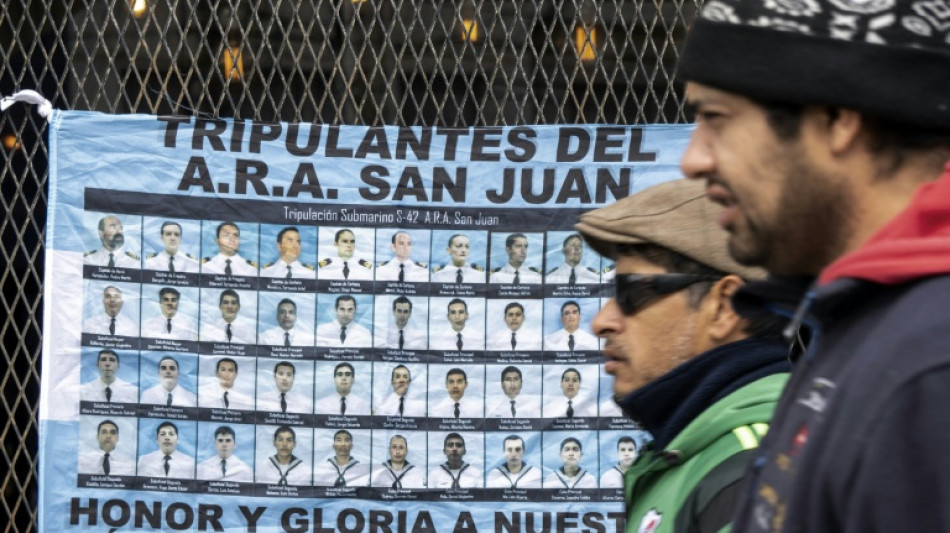
None of the families of the victims -- 43 men and one woman -- attended the start of the trial in Rio Gallegos, a more than three-hour flight from Buenos Aires.
A lawyer for 34 of the families said they did not have the means to travel to Patagonia.
The disappearance of the San Juan remains a collective trauma in Argentina.
More than a dozen countries took part in the weeks-long search for the vessel, which was eventually located a year later by a private British marine robotics firm, its hull dented and deformed.
M.Aguado--ESF