Uncertainty over war-induced oil crisis dominates key energy summit / Photo: © AFP

The world's largest energy conference wrapped up in Houston on Friday with the crisis caused by the US-Israel war on Iran dominating discussions -- but with little to show for it beyond a prevailing sense of uncertainty.
A week of meetings for CERAWeek -- dubbed the "Davos of Energy" -- saw around 10,000 executives and experts gather to discuss the latest in their industry.
"The industry is underestimating the geopolitical turmoil and geopolitical risk that's ahead," said Mark Brownstein, vice president of the Environmental Defense Fund.
Saturday marks a month since joint US-Israeli strikes on Iran launched a war that has engulfed the region, with Iran retaliating against Gulf countries and Israel invading Lebanon.
Oil prices have skyrocketed after Tehran essentially blockaded the Strait of Hormuz, bringing the flow of around a fifth of the world's oil and gas supplies to a standstil.
The effects of the crisis were a central theme at the conference in Houston.
"The reverberations that this will have on the economy, on people, on inflation is very worrying," said Coralie Laurencin, an energy specialist at S&P Global, the conference's organizers.
"I worry that we are in for a prolonged period of instability and uncertainty," said Brownstein, "that has important follow-on effects."
Chevron CEO Mike Wirth told a packed room on Monday that oil prices had not yet fully absorbed the effects of the blockade of the Strait of Hormuz.
The crisis has global implications, and Shell CEO Wael Sawan warned that energy shortages -- including gasoline and diesel -- could begin to hit Europe as early as next month.
- 'Chaos and instability' -
On Friday, the fighting in the Middle East was still raging. Even when it ends, it will take time for oil producers to repair damaged infrastructure and restart facilities.
This is particularly true of Qatar, the world's second-largest exporter of liquefied natural gas (LNG).
"We're gathered at a momentous time of uncertainty, of chaos and instability," said Jamey Rosenfield, founder and co-chair of CERAWeek, during the closing event on Friday.
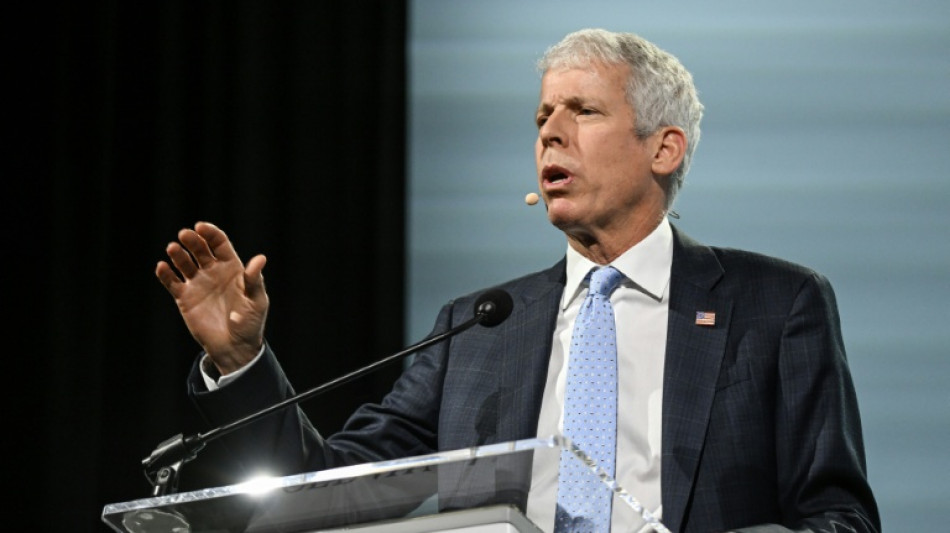
US Energy Secretary Chris Wright, who attended the opening of the conference, sought to reassure attendees, stating that the Trump administration was taking measures to increase supply.
This included lifting sanctions on Russian and Iranian oil supplies that were already at sea.
Wright insisted the disruptions were "temporary."
But industry insiders left the conference feeling unclear about a path forward.
"What I heard this week was that no one knows how you end the primary problem, which is the war," said Laurencin.
C.Aguilar--ESF