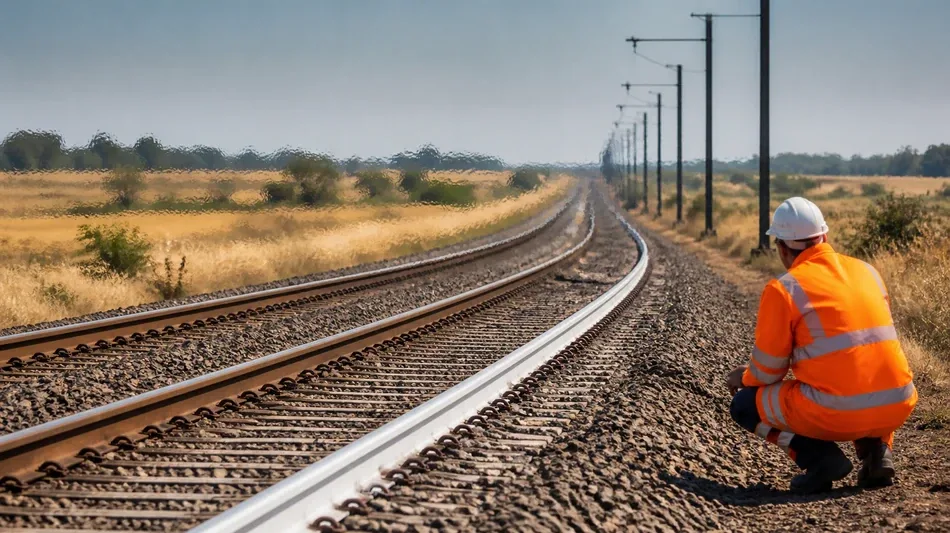
Extreme heat exposes vulnerabilities across Britain's rail network

A hot and dry summer has renewed scrutiny of how Britain's railways handle expanding steel, shrinking soils and ageing infrastructure.
Britain's rail network has faced a series of heat-related stresses during one of the country's hottest and driest summers on record. A derailment near Lewes in East Sussex injured 30 people, while a Greater Anglia train derailed at Wickford station in Essex the following day without reported injuries.Railway steel expands in high temperatures. Because modern rails are welded into long continuous sections, expansion creates compressive forces that can lead to buckling if the track cannot move safely. Network Rail says most of the network can operate with rail temperatures up to 46C, roughly equivalent to an air temperature of 30C, but rail temperatures have reached 51C. Two days of record heat in 2022 led to almost 7,700 train cancellations and an estimated £30 million in costs.Extended drought creates a separate problem beneath the rails. Dry soil can shrink and settle unevenly under the weight of trains, affecting sleepers, ballast and embankments. Some parts of the network, including embankments and tunnels, date back to the 19th century.British rails are generally stressed so that compression becomes a major issue above an air temperature of about 27C. In hotter regions of countries including Australia and the United States, the stress-free temperature can exceed 35C. Raising the British standard could improve summer resilience but would increase the risk of rail fractures during cold weather. Concrete slab track offers greater stability but costs about four times as much to install as conventional ballasted track.Network Rail already paints some rails white, a measure it says can make them 5C to 10C cooler. A taskforce formed after the 2022 heatwave also suggested that modern, well-supported track could potentially be designed around a 30C stress-free temperature. Better monitoring remains a priority: fewer than half of the track buckles recorded in 2022 had been identified beforehand.The Rail Accident Investigation Branch has not concluded that heat caused the Lewes derailment. Its interim findings identified a track-geometry irregularity, and investigators noted that the clay embankment at the site is sensitive to changes in water content. Network Rail said it would continue to support the independent investigation and act on any lessons that emerge.
V.Martin--ESF