13 Strategies for Transforming a Phoenix Balcony into a Functional Hangout Space

Phoenix apartment balconies offer limited square footage but significant potential for customization. By selecting durable, multi-purpose furniture and adhering to local fire and leasing regulations, residents can create functional outdoor retreats that withstand the intense desert sun and monsoon seasons while providing space for dining, relaxation, and socializing.
Transforming a Phoenix apartment balcony into a functional hangout space requires balancing aesthetic desires with the practical constraints of desert living and rental regulations. While not all balconies are created equal, almost any outdoor area can become a cozy retreat through strategic selection of furniture, decor, and amenities that withstand local weather conditions.
Before introducing any items to the space, residents must verify their apartment complex’s guidelines, Homeowners Association (HOA) rules, or property management policies. This is particularly critical for items that attach to railings, walls, or ceilings. A general rule of thumb is to avoid anything that leaves permanent marks unless the tenant prefers to ask forgiveness rather than permission—a strategy that can result in costly lease violations.
Defining the desired atmosphere is the first step in the transformation process. Whether the goal is a soothing retreat, a fun social hub, or a whimsical escape, specific items can cater to these vibes. One of the most impactful additions for many residents is a small gas grill. Even if the complex provides communal barbecue areas, a compact personal grill allows for intimate dinners with friends without the hassle of transporting food and supplies to a shared space. It offers the aroma and experience of backyard cooking in a confined urban setting.
However, grilling on a balcony involves significant regulatory hurdles. Residents must check both complex rules and local fire ordinances regarding distances between dwellings and grills, as well as floor type restrictions. For instance, wooden floors often prohibit grill use due to fire risk. If permitted, residents should seek compact models designed specifically for small outdoor spaces.
Flooring is another foundational element. An outdoor rug can instantly add personality to a plain concrete or gravel surface, introducing color and design without causing damage. Unlike indoor carpets, outdoor rugs are engineered to withstand the elements, including water resistance for occasional Phoenix monsoons. Modern options are also fade-resistant, a necessary feature given the intensity of the Phoenix sun. These rugs are generally lightweight and easy to clean, though pet owners should be cautious; some dogs may mistake green rugs for turf. For pet-friendly alternatives, strategically placed artificial turf in a corner can provide a designated relief area, with products like OdoBan recommended for odor control.
Furniture selection must prioritize durability and maintenance. Metal bistro tables paired with seasonal cushions offer an aesthetic and practical solution for enjoying coffee or wine. Acacia wood furniture provides a more timeless look but requires regular oiling to prevent damage from exposure. Plastic furniture, while inexpensive, is prone to cracking under prolonged sun exposure. For those seeking flexibility, folding camp chairs are a bargain option that can be stored indoors to avoid weather damage and taken on camping trips when not in use.
Pet owners can also integrate their animals into the balcony design. Waterproof dog beds and elevated food dishes create dedicated spaces for pets, while small catios or cat trees can turn the balcony into an outdoor retreat for felines. These items often serve dual purposes, doubling as travel gear for camping.
For seating that maximizes space, hammock chairs are a whimsical option, particularly if the patio has a sturdy overhang. Many feature steel frames with macramé material or soft cloth rated for light swinging. They offer sensory stimulation and can double as camping gear. Crucially, any hanging chair must be attached only to structures specifically rated to support its weight; experimenting with questionable structural integrity on a balcony is dangerous.
Greenery can transform a concrete space into a sanctuary. Railing planters are ideal for herbs or flowers, adding a line of greenery that enhances the illusion of privacy without requiring permanent alterations. Hanging planters and plant stands can showcase succulents or annuals in corners. While most complexes allow some form of greenery, residents should verify whether drilling holes is permitted for hanging planters. Many railing planters simply hang over the edge using gravity and hooks, making them renter-friendly.
Entertainment options should be portable to accommodate limited square footage. Cornhole is a popular game in Arizona, but traditional two-team boards are often too large. A single, custom-designed cornhole board can add fun when friends visit and be packed away when space is needed. It also travels well to parks or tailgates.
For ambiance, tabletop fire pits using propane or other fuels offer a small-scale campfire experience. These allow residents to gather around a flame while staying in their urban oasis. However, open flames are subject to strict regulations. Residents must check apartment complex rules and county fire restrictions before bringing any open-flame appliance onto a balcony. Gas-powered flames are generally more permissible than wood fires.
Lighting plays a crucial role in extending the usability of the balcony into the evening. String lights along railings or overhead can make a basic space feel intentional and inviting. Outdoor-rated lights designed to withstand heat and weather are essential. Solar-powered options are useful if outdoor outlets are inaccessible. These lights take up minimal floor space, leaving room for other furniture.
Multi-purpose furniture is key in small spaces. A large air hockey table, for example, can be modified with a removable plywood top to serve as a crafting or dining surface when not in use. This creates both hosting and play space without requiring separate pieces of furniture. Similarly, shade solutions are vital during the hottest parts of the day. Sturdy umbrellas provide easy shade but must be taken down during monsoons or dust storms. Sunshades attached with hooks between the roofline and banister offer another option, though they may require permission or sturdy sticky hooks. Roll-down shades can also double as outdoor movie screens, turning the patio into a temporary theater.
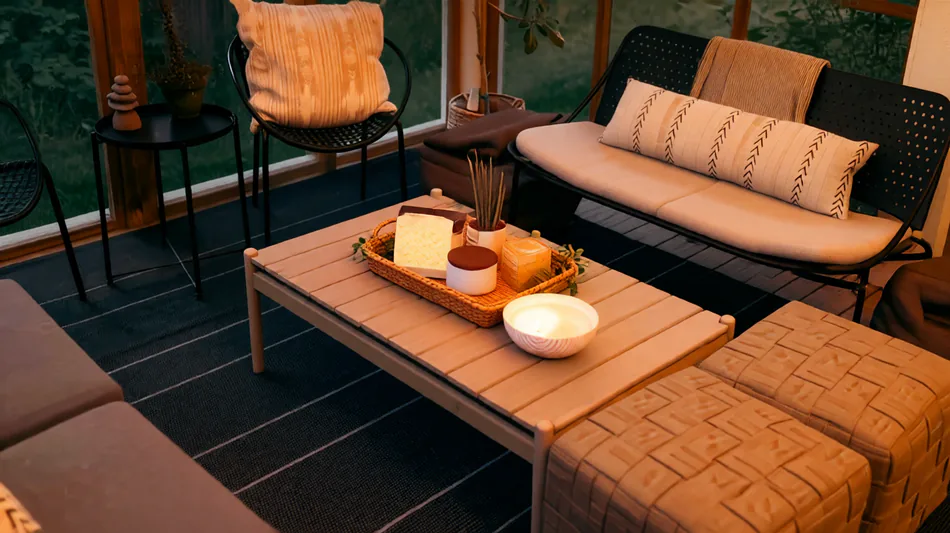
Finally, decor should be intentional rather than cluttered. Choosing a few core colors and building around them creates visual appeal. Contrasting colors like yellow and blue can add interest, while monochromatic palettes make small spaces feel cohesive. Texture and material matter; woven chairs, patterned rugs, and leafy plants create visual depth without needing numerous decorative objects. Resisting the urge to add every possible amenity is crucial. A couple of standout pieces often have more impact than many smaller items competing for attention.
Themes can also define the space. Whether inspired by cherubs, gnomes, farm-chic decor, or Southwestern elements, focal points should be simple enough to let other design elements shine. The goal is not to create a balcony worthy of a furniture catalog, but one that reflects the resident’s personality.
While a Phoenix apartment balcony may never match a sprawling backyard, it can serve as a place for morning coffee, growing herbs, playing games, hosting friends, or simply enjoying the evening. With creativity and adherence to rental rules, even a few hundred square feet can become a space worth staying home for.
D.Cano--ESF