Municipal Elections: How Service Failure Becomes a Public Health Crisis in South Africa

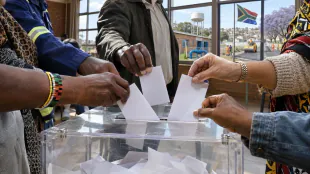
With South Africa’s municipal elections underway, public health advocates are drawing a stark parallel between drunk driving and voting behavior, arguing that the failure of local government services directly contributes to preventable illness and death. From contaminated water supplies to unsafe road infrastructure, the consequences of municipal neglect are measured in lives lost, urging voters to evaluate candidates based on their ability to deliver essential safety protections rather than partisan loyalty.
As South Africa prepares for its municipal elections, a growing chorus of public health experts is challenging voters to look beyond traditional political allegiances and consider the direct link between local governance and human survival. The argument posits that the failure of municipal services—ranging from water sanitation to road safety infrastructure—creates conditions where preventable deaths occur with alarming regularity.
This perspective draws a deliberate comparison to past public safety campaigns, such as those against drunk driving, which sought to make individuals recognize that personal choices could have deadly consequences for others. Advocates argue that this same logic must apply to the electorate: choosing candidates who cannot or will not maintain essential services is akin to enabling harm.
"Every year, South Africans suffer illness, injury and death from hazards that functioning municipal services should help prevent," said Dr. Wolvaardt, founder of the Foundation for Professional Development. "For many households, failing services are not inconveniences they can pay to escape. Those who can afford alternatives should not imagine that money provides complete protection. It cannot. Municipal failure can become a matter of life and death for everyone."
The roots of modern public health lie in the recognition that government must ensure the safety of living environments. This principle emerged from historical crises, such as the cholera epidemics in Victorian London, where physician John Snow traced an outbreak to a contaminated water pump and engineer Joseph Bazalgette designed a sewer network to address the "Great Stink." These interventions established the foundation for public health disciplines focused on community-wide protection through vaccination, disease surveillance, and environmental safety.
Nearly 170 years later, South Africa faces similar challenges but with deteriorating infrastructure. The government’s 2025 Green Drop report, which assessed wastewater management for the 2023/24 financial year, revealed that 47% of municipal wastewater systems—396 out of 848—are in a critical state. This represents a significant increase from the 39% recorded in the 2022 report.
When sewage treatment plants fail, the risk of drinking water contamination rises sharply. Communities face increased exposure to cholera, typhoid fever, dysentery, and hepatitis A. In Hammanskraal during May and June 2023, a cholera outbreak killed dozens of people amid long-standing failures in water and sanitation infrastructure. While government confirmed that the malfunctioning Rooiwal wastewater works polluted the river feeding the drinking-water supply, it could not definitively attribute the deaths to this specific cause.
Beyond water safety, food security remains another critical area where municipal oversight is vital. In October 2024, six children in Naledi, Soweto, died from exposure to terbufos, a highly hazardous pesticide. A Cabinet update in June 2025 stated that the exact circumstances of exposure remained uncertain, though contaminated food purchased from a local spaza shop was considered the most plausible explanation.
Road safety presents another urgent public health concern. Transport Minister Barbara Creecy reported on September 2 that 6,457 people died on South African roads between January 1 and August 23 of this year. Pedestrians accounted for 48% of these deaths, approximately 3,100 individuals killed while walking.
Poor urban design often exposes pedestrians to fast-moving traffic without adequate pavements or safe crossings. Compounding these structural failures are speeding, alcohol impairment, and poor street lighting. While municipalities cannot prevent every road accident, the design and maintenance of roads, pavements, crossings, and lighting are practical tools local government uses to protect walkers.
Dr. Wolvaardt emphasized that voting in municipal elections is effectively a decision about the conditions on which lives depend. "Staying away does not stop a council being elected or a budget being spent," he noted. "Nor should loyalty to a party excuse us from examining the competence and conduct of its candidates."
The role of a ward councillor is to represent residents, scrutinize decisions, and hold municipal administration accountable. Voters are urged to ask candidates specific questions about their plans for waste collection, food safety inspections, environmental pollution control, and communicable disease prevention. Key inquiries include whether these plans are funded, measurable, and supported by reliable service-delivery indicators.
Regarding road safety, voters should seek proposals for reducing road injuries, protecting pedestrians, maintaining street lights, managing flood risks, and ensuring functioning emergency services. For incumbents, the record of achievement is critical; for newcomers, qualifications, experience, and credible plans must be evaluated.
"We cannot guarantee what an elected representative will do," Dr. Wolvaardt stated. "We can demand evidence before entrusting them with power – and hold them accountable afterwards. Will they support publishing reliable service-delivery indicators, infrastructure maintenance plans, budgets, audit findings and progress reports? Will residents know who is accountable when commitments are not met?"
The comparison to drunk-driving campaigns highlights a behavioral insight: people often underestimate the consequences of decisions that have become routine. Local government elections are frequently treated as political contests rather than assessments of institutional competence. However, the consequences of municipal failure are measured not only in missing money or broken pipes but also in lives.
As voters head to the polls, the central question remains whether they will prioritize candidates who can demonstrate the capacity to deliver essential public health protections over those who offer only political loyalty.
V.Abaroa--ESF